
The illusion of leverage in Trump’s Saudi Arabia gamble
By Axel Mallet
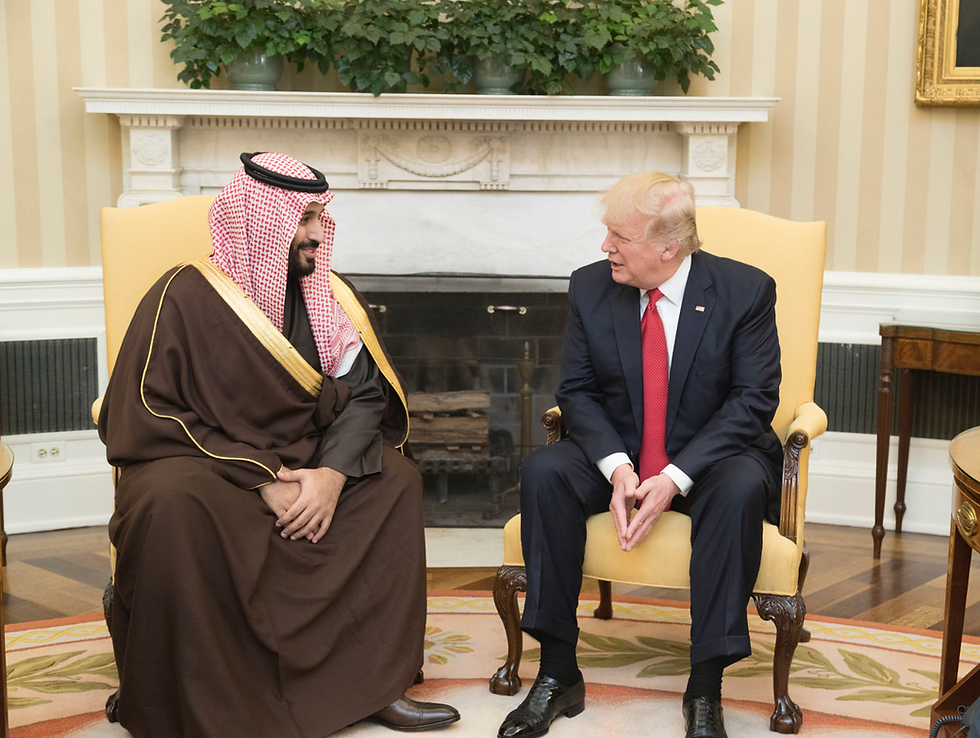
A lavish arrival awaited Mohammed Bin Salman (MBS), the Crown Prince of Saudi Arabia, at the steps of the White House in mid-November. A procession of soldiers on horseback carrying Saudi flags followed his ascension on the red carpet-laden steps of the presidential residence. Seven years after ordering the murder of a Washington Post columnist, MBS seemed to have little to worry about– except how ridiculously asymmetrical the ‘deals’ with Trump could become before the president noticed. Three hundred M1 Abrams tanks, future F-35 stealth fighter deliveries (which would break Israel’s regional monopoly on the jet), civil nuclear cooperation, and elevation to major Non-NATO Ally status are just of the many few of the big gains for the Prince. However, this stands at the cost of pledging to invest a trillion dollars in the States, an amount of money he simply does not have. If the meeting made it clear that human rights is the least of Trump’s worries in establishing a strong allyship, it was also telling of Trump’s second-term foreign policy approach.
The Art of the (bad) Deal
The gains for America might not seem too bad; after all, he isn’t giving these assets away for free. The tanks should net him around $7 billion, while the jets are somewhere between $5-6b. Furthermore, these sales will support American jobs and the trillion-dollar investment, albeit of questionable credibility, gives at least the prospect of furthering American prosperity. Trump will equally argue the strategic case for this deal: a more powerful Saudi Arabia counters Iran, places regional security in the hands of an ally, and ultimately paves the way for Israel–Saudi normalisation.
The case for calling such a deal a success falls apart when looking at how the US has historically conducted its arms deals. For instance, take America’s military sales to Egypt: continuous since 1978, they make this aid conditional on peace with Israel and have been willing to revoke it under any threat. There are no conditions here. Saudi Arabia has a lot to lose from a weakened relationship with the US, yet it seems Trump has woefully underplayed his hand. He has given the weapons upfront and is now hoping for reciprocity. Despite his incredible leverage, the president failed to secure normalisation, failed to advance negotiations for a lasting end to Saudi intervention in Yemen, and failed to get Saudi Arabia to guarantee non proliferation before agreeing to nuclear collaboration.
Finally, Trump’s willingness to pursue allyship despite the feud over journalist and dissident Jamal Khashoggi’s murder damages American accountability. MBS ordered Khashoggi’s dismemberment at the Saudi embassy in Istanbul in 2018, which later led to President Biden calling Saudi Arabia a “pariah” and downgrading their relationship. Today, the implicit lesson stands: liability expires when interests do not. While the supremacy of commercial gain despite repression isn’t out of place for Trump’s ‘America First’ policy line, it is also yet another loss for democracy and freedom, a sad reflection for American ideals.
Today, the implicit lesson stands: liability expires when interests do not.
Mistaken optimism may be costly
The strategic ‘crown jewel’ behind Trump’s negotiations is the normalization of Israel–Saudi relations. Where it would isolate Iran, reshape the alliances of the Middle East, and crown Trump’s legacy, MBS has already made his position clear. A clear path towards Palestinian statehood is the minimum for such a move to not be completely politically toxic in the context of the Gaza war. Netanyahu’s right to the far-right coalition government in Israel, whose parties are still ahead in the polls ahead of next year’s election, is staunchly opposed to Palestinian statehood and in favour of Israeli settlement. No number of tanks and jets will bridge that contradiction; Trump has spent his leverage yet will remain crownless.
If Trump is hoping that, as he said, proliferation terms are "not urgent" with Saudi Arabia, he may instead ought to express some concern. The deal included a declaration on nuclear energy collaboration, but the question of enrichment, the process that gives simple energy-grade uranium military capability, remains open. Whether MBS’s 2023 comments that “If Iran gets nuclear weapons, we have to get one” signify posture or intent, Trump’s decision to proceed without the caution of securing the nonproliferation terms that Congress and experts suggest was reckless.
Furthermore, the wider aim of isolating Iran may be misplaced in MBS’s hands, who ultimately restored diplomatic relations with Tehran in 2023 under a China-brokered deal. If Trump is looking to achieve this strategic objective without direct involvement by arming Saudi Arabia as a counter to Iran, he overlooks that MBS is hedging. Not committing to permanent confrontation with its neighbour across the Gulf means Trump’s arms sales does not guarantee alignment with US–Iran strategy—they just guarantee arms sales.
The verdict of this ‘deal’ therefore looks bleak. If Trump’s aim was headlines and press releases, he may have succeeded; but Uncle Sam, who manufactures the weapons that are about to arm the same leader the American administration was so-recently calling a “pariah”, appears to gain little. Little headway has been made in the way of American objectives. It remains unclear how much MBS can be trusted. Transactionalism may work for arms sales when that is all they are, but Trump’s goals of regional realignment will inevitably fail.
Image: flickr
Comments